

โทรศัพท์ติดต่อ DMC : ค้นหาหนังสือธรรมะ หน้า 434 / 615
หน้าหนังสือทั้งหมด
95
Dai Buddhist Manuscripts in Yunnan's Dehong Prefecture
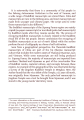
It is noteworthy that there is a community of Dai people in the Dehong Autonomous Prefecture in the west of Yunnan, and a wide range of Buddhist manuscripts are stored there. Palm-leaf manuscripts are
This text discusses the unique tradition of Buddhist manuscripts among the Dai people in Dehong Autonomous Prefecture of Yunnan, where various types of manuscripts are produced. Most texts utilize sa-
96
The Imminent Extinction of Palm-Leaf Manuscripts in Sipsong Panna
III The Problem of the Imminent Extinction of Palm-Leaf Manuscripts in Sipsong Panna
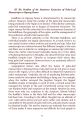
Buddhism in Sipsong Panna is characterised by its manuscript culture. However, today the number of the palm-leaf m
This text discusses the worrying decline of palm-leaf manuscripts in Sipsong Panna, where Buddhist manuscript culture is rich but facing imminent extinction. Key reasons include the autonomous nature
97
Preservation of Palm-Leaf Scriptures in Dai Buddhism
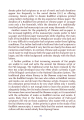
donate palm-leaf scriptures as an act of merit and such donations
appear less frequently in the sacred dantam (贽坦) or offering
ceremony. Donors prefer to donate Buddhist scriptures printed
using mod
This text discusses the decline in donations of traditional palm-leaf scriptures in favor of more accessible and readable texts printed on Chinese and sa-paper. Reasons include cost, legibility, and t
100
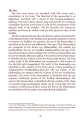
The Dhammakāya Verse: A Lan Na Thai Manuscript
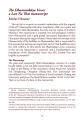
The Dhammakāya Verse:
a Lan Na Thai manuscript
Kitchai Urkasem
This article is a report on research undertaken with the support of the 60th Dhamma chai Education Foundation (DEF) on a palm leaf manu
This article discusses research supported by the 60th Dhamma chai Education Foundation on a palm leaf manuscript titled Dhamma kāya from northern Thailand's Lan Na region. Undated, it is believed to h
101
Understanding the Pāli Verses and Buddhist Doctrine
The Text
The first nine leaves are inscribed with Pāli verses and a commentary in Tai Yuan.4 The final leaf of the manuscript is an addendum, inscribed with a stanza of the Dvatiṃsa-mahāpuruśa-lakkhaṇ
The manuscript presents Pāli verses and commentary in Tai Yuan, summarizing Buddhist doctrines about the Buddha's physical body and wisdom. It includes thirty stanzas highlighting qualities like divin
102
Wisdom and the Dhammakāya in Buddhist Teachings
Some of the qualities or forms of wisdom listed in the text are exclusive to Buddhas such as omniscience (sabbaññutāna), intrepdity (vesārajjanāna), and the ten supreme intellectual powers of a Buddha
The text highlights unique qualities of wisdom exclusive to Buddhas, including omniscience and the ten intellectual powers. It discusses the dhammakāya as the embodiment of a Buddha's inner wisdom, di
106
พุทธศาสนาและมรรคผล
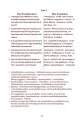
"sabbānūṭāṇa pāvarasisaṁ; Nibbānarammana pavaravirasatikasēm; Catuṭṭhāṇa pāvaranarāṭam; Vajjirasamāpatīṇaṁ pāvaruṇṇāsaṁ; Nilakasinasobhāṭikanta pavara; bhamuyuggalam; Dibbacakku; Samantāccakku; Paṇñāc
บทความนี้สำรวจแนวคิดทางพุทธศาสนาเช่นการเข้าถึงนibbana การพัฒนาปัญญาและวิธีการที่ทำให้บรรลุผลในด้านจิตใจและจิตวิญญาณ ตามหลักการของพุทธศาสนา เช่น สั่งสมปัญญา แอปฏิบัติและความเข้าใจเกี่ยวกับธรรมะและการใช
111
อสยานสุขและปรเสิฏุแห่งพรเจ้า
อสยานสุขเป็นคู่ฌอุณปรเสิฏุแห่งพรเจ้า
ทสุสผลญญปวรมชญมภมิกํประยานรู้งผล
อันเป็นองคทำางดอันปรเสิฏุแห่งพรเจ้า
ปฏิวชุปปกิจ
นาอภิเราะอันรยปฏิวจสมปทกำรงมรา
ยอิววิชาเปนดนมินิโปลเปนทุสุขเปนสดีอ
ปณเสิฏุแห่งพรเ
บทความนี้นำเสนอแนวคิดเกี่ยวกับอสยานสุขและความสำคัญของปรเสิฏุแห่งพรเจ้า ที่ซึ่งมีการอ้างอิงถึงความรู้และพลังอำนาจในด้านต่างๆ ทั้งนี้ได้มีการตั้งคำถามถึงความเชื่อมโยงระหว่างจิต วิญญาณ และสภาพแวดล้อมที่ท
118
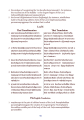
คำพยานของพระเณร
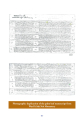
ธรรมนาว มี 10 หน้า
ตัวอย่างที่ 1 คำพยานของพระ เณร มะ
ตัวอย่างที่ 2 คำพยานของพระ เณร ห
ตัวอย่างที่ 3 คำพยานของพระ เณร ฉ
ตัวอย่างที่ 4 คำพยานของพระ เณร ผ
ตัวอย่างที่ 5 คำพยานของพระ เณร ฝ
ตัวอย่างท
การนำเสนอคำพยานจากพระเณรจำนวน 10 ตัวอย่างที่มีความสำคัญในกลุ่มธรรมนาว โดยจะมีการสอดแทรกความรู้เกี่ยวกับการศึกษาและการตีความคำพยานเหล่านี้ พร้อมทั้งสำรวจความหมายและความสำคัญในบริบทของวัดป่าสักน้อย โดยเ
120
An Shigao and Early Chinese Meditation Techniques
An Shigao and Early Chinese Meditation Techniques¹
Phra Kiattisak Kittipanyo² (University of Otago)
An Shigao安世高 (147~168 CE) played an important role in the early transmission of Buddhism into China
An Shigao (147-168 CE) significantly influenced the early transmission of Buddhism in China. Despite a focus on his ethnicity and translation style, he is recognized as a respected meditation master.
121
The Influence of An Shigao on Mindfulness Breathing Meditation in Eastern Han China
In this paper I explore the connections between An Shigao and the introduction of the Indian Buddhist meditation technique of mindfulness breathing meditation, or ānāpānasmṛti, into Eastern Han China.
This paper examines An Shigao's role in introducing the Indian mindfulness breathing meditation technique, ānāpānasmṛti, into Eastern Han China. The phrase「息中具有四大。 而心在中」suggests that the mind should f
123
Buddhist Sutras Compilation
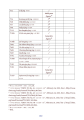
T32 Si di jing 四譯經 Madhyama Āgama19
T36 Benxiong yizhi jing 本相獻曆經 /20
T48 Shifa fejiajing 是法非法經 /21
T57 Lou fenbu jing 漏分布經 /20
T98 Pufa yi jing 普法義經 /22
T112 Ba zhendaojing 八正道經 /23
T150a
This compilation includes key Buddhist texts such as the Madhyama Āgama, the Eightfold Path Sutra, and various other sutras that explore core principles of Buddhism. These scriptures serve as guidepos
124
Meditation Practices Introduced by An Shigao in Eastern Han China
What kind of meditation did An Shigao introduce into Eastern Han China?
An Shigao and other Central Asian translators were welcomed into Eastern Han China (25-220 CE), by the cultured elites who were
An Shigao, notable for his translations, played a key role in introducing meditation practices to Eastern Han China (25-220 CE). The prevalent form during this period was breathing meditation, particu
125
Meditation Techniques from An Shigao's Teachings
breathing in, and count two at the end of breathing out. If you
count any other number than two when it should be two, start
counting over from one. If you count any other number than
nine when it sho
This text delves into meditation practices from An Shigao’s works, particularly highlighting the Anban shouyi jing, a crucial scripture translated from Sanskrit. The sutra emphasizes mindfulness of br
129
Exploring the Center of the Body in Meditation
Thus, the phrase 『息中具有四大。心在中』 can be interpreted as: "the mind should be located at the centre of the body while breathing (in and out)." The precise position of the centre of the body where the mind
This text examines the phrase 'the mind should be located at the center of the body while breathing in and out.' It references the teachings of PhraMongkolthepmuni regarding the center's location abov
131
Eastern Han Buddhist Meditation and Daoism
Eastern Han Buddhist meditation and Daoism
By the middle of the first century CE, a Buddhist community was already in existence in China, and growing. The arrival of translators from Central Asia and
By the first century CE, Buddhism had begun to take root in China, with translators arriving from Central Asia and India to convert texts into Chinese. They initially faced challenges in accurately co
132
Daoist Meditation in the Eastern Han Period
Daoist meditation in the Eastern Han period
When An Shigao arrived in China around 148 CE, very few if any Buddhist meditation texts had been translated into Chinese.60 However the Chinese people were
In the Eastern Han period around 148 CE, Daoist meditation practices already existed, with references found in ancient texts like the Tao Te Ching. Practitioners sought immortality through various tec
133
The Practice of Neidan: Achieving Longevity and Immortality
finding is a method of finding illumination by returning to the fundamental order of the cosmos65. This involves fully emptying out the contents of consciousness until a condition of union with the wa
The text discusses Neidan, a method for achieving union with the cosmos through deep meditation and consciousness emptying. It examines key concepts such as attaining the One, the empty Way, and the P
138
Exploring Chinese Philosophical Texts and Their Influence
Kohn, Livia, and Yoshinobu Sakade. Taoist Meditation and Longevity Techniques. Center for Chinese Studies, University of Michigan, 1989.
Mair, Victor H. “What Is Geyi, After All?” In Philosophy and Re
This collection examines various texts that shed light on the development of Chinese philosophical thought and literary traditions. Works range from Livia Kohn's exploration of Taoist meditation pract
139
Buddhist Texts and Historical Studies
The SAT Daizōkyō Text Database Committee. “出三藏記集 (No. 2145 (僧祐提)) in Vol. 55.” Taishō Shinshū Daizōkyō (大正新修大藏經), March 17, 1998. http://21dzk.l.u-tokyo.ac.jp/SAT/ddb-sat2.php?mode=detail&useid=2145,_
This collection includes significant Buddhist texts and studies, such as the Mahāyāna Buddhism foundations by Paul Williams and insights into early Chinese Buddhism by Erik Zürcher. Scholarly works di